
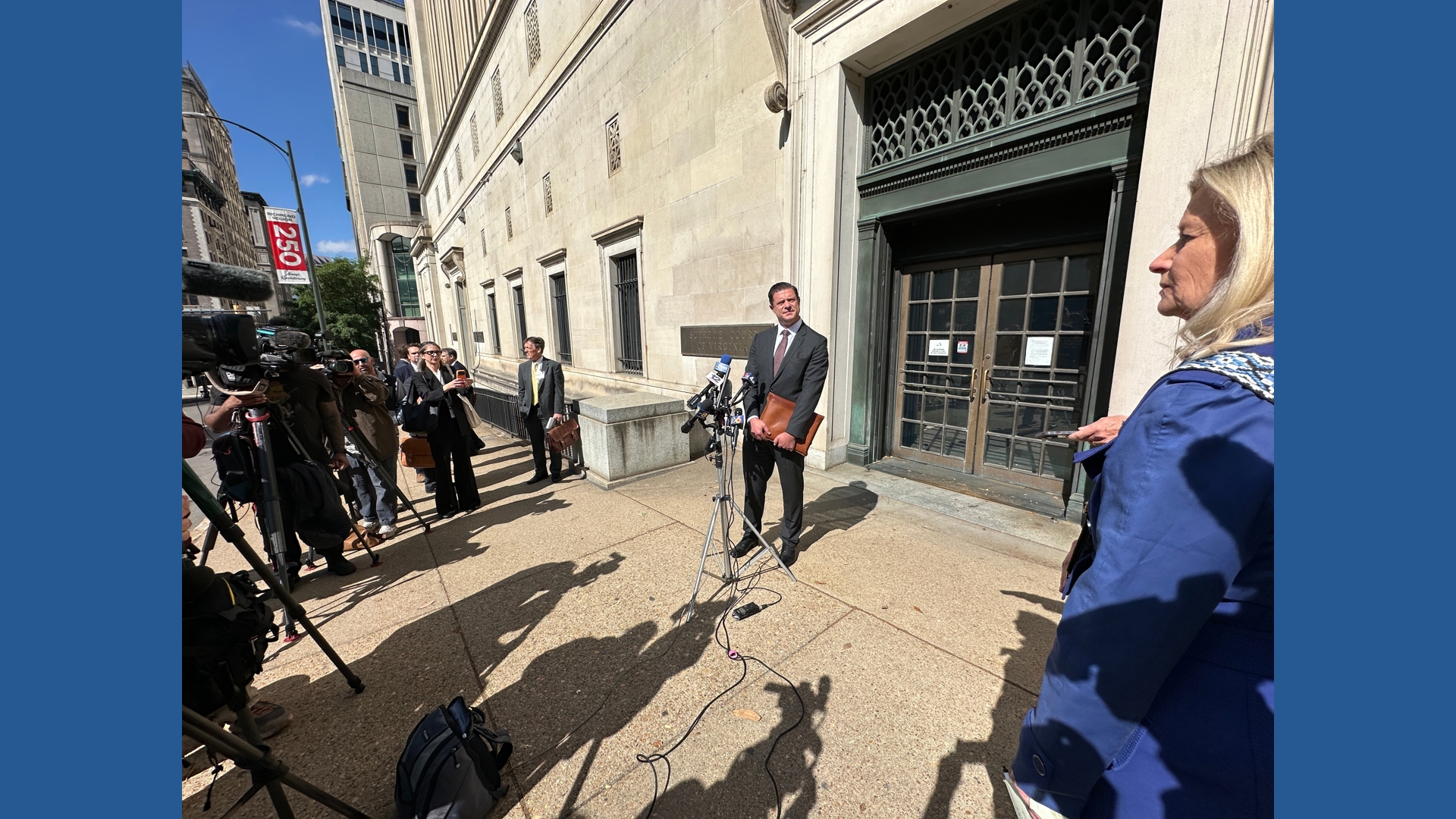
A democratically approved congressional map in Virginia—endorsed by voters and designed to curb partisan manipulation—is now under judicial threat. The Virginia Supreme Court is considering whether to block a House map that leans Democratic, reigniting a national debate over who controls redistricting: the people, politicians, or the courts.
The map in question emerged from a constitutional amendment approved by Virginia voters in 2020, which created an independent redistricting commission to draw legislative and congressional boundaries. When the commission deadlocked along party lines, the task passed to the Virginia Supreme Court—ironically, now the body being asked to strike down the resulting court-drawn map.
This moment isn’t just about district lines. It’s a test of democratic legitimacy, judicial authority, and whether structural reforms meant to end gerrymandering can survive political backlash.
The Origins of Virginia’s Redistricting Reform For decades, Virginia’s legislative maps were routinely gerrymandered by whichever party held power. Republicans drew lopsided advantages when in control; Democrats did the same when they gained it. The process eroded public trust, leading to a grassroots push for reform.
In 2020, voters responded overwhelmingly—55% in favor—approving a constitutional amendment to establish the Virginia Redistricting Commission. Composed of eight legislators and eight citizens, the commission was supposed to draw fair, balanced maps with input from the public and nonpartisan experts.
But in 2021, the commission failed to agree on final maps. By constitutional design, the responsibility fell to the Virginia Supreme Court, which appointed special masters—retired judges and mapping experts—to draw the boundaries.
The court-adopted map created a congressional delegation with an estimated 5 Democratic seats and 4 Republican seats, reflecting statewide voting trends more accurately than previous GOP-favoring maps. But now, Republican petitioners are asking the same court to invalidate that map—arguing it intentionally favors Democrats.
Why Republicans Are Challenging the Map
The current legal challenge stems from a petition filed by Republican voters and state GOP leaders. They allege that the court-drawn map violates the state constitution by intentionally diluting Republican voting power in key regions, particularly Northern Virginia and Richmond.
Their core argument hinges on two clauses: - The Equal Protection Clause of the Virginia Constitution - Provisions requiring districts to be “geographically contiguous” and respect “communities of interest”
Petitioners claim that the map splits jurisdictions like Loudoun and Prince William counties in ways that benefit Democrats, while packing Republican voters into fewer districts. They argue this constitutes illegal partisan gerrymandering—ironic, given the map was drawn by court-appointed experts, not politicians.
But critics of the challenge say it’s a transparent attempt to invalidate a map drawn under rules the GOP opposed from the start. “This isn’t about fairness,” said Laura Hill, a nonpartisan redistricting analyst. “It’s about reclaiming a process that no longer guarantees them an outsized advantage.”
The Map’s Democratic Lean: By Design or Necessity?
While the map results in a Democratic advantage, that outcome is closely tied to Virginia’s evolving electorate. Since 2008, the state has voted Democratic in every presidential election. Suburban shifts, demographic changes, and urban growth have tilted the Commonwealth leftward—especially in areas like Fairfax, Arlington, and Alexandria.
The court-drawn map reflects this reality. For example: - The 7th Congressional District, once a GOP stronghold, is now competitive and leans Democratic. - The 10th District, covering parts of Loudoun and Fairfax, is solidly blue. - The 5th District, stretching across central and southern Virginia, remains the only safely Republican seat.
But rather than being the product of partisan manipulation, these outcomes stem from adherence to court-mandated criteria: compactness, continuity, and population equality. The map also prioritized splitting the fewest number of localities—only 11 of Virginia’s 133 counties and cities were divided.
When compared to previous GOP-drawn maps that split 30+ jurisdictions to protect incumbents, the current map is arguably more neutral in process, if not in outcome.
Judicial Dilemma: Can the Court Invalidate Its Own Creation?
The most striking tension in this case is that the Virginia Supreme Court is being asked to block a map it put in place. The justices appointed the special masters, reviewed their work, and adopted the final boundaries. Now, they’re being told those same boundaries are unconstitutional.
This raises a profound judicial question: Can a court act as both architect and arbiter of its own redistricting decisions?
Legal scholars are divided. Some argue the court has a duty to correct constitutional violations, regardless of origin. “Judicial accountability doesn’t end at adoption,” said Richard Briffault, a Columbia Law professor specializing in election law. “If a map violates the constitution, it’s the court’s job to say so—even if they helped make it.”
Others warn of institutional overreach and inconsistency. “The court established a process to depoliticize redistricting,” said election law expert Rick Hasen. “Now, if they overturn the outcome because it helps Democrats, they risk looking political themselves.”
Real-World Implications for Future Elections
The stakes extend far beyond the 2024 House races. How the court rules could shape Virginia’s political landscape for the next decade.
If the court blocks the current map: - It may order new maps drawn by the legislature—where Republicans now hold power. - That could lead to a GOP-favoring map, despite the statewide Democratic lean. - Voter confidence in redistricting reform would collapse.
If the court upholds the map: - It affirms the authority of court-appointed experts over partisan legislatures. - It validates the 2020 constitutional amendment as a functional check on gerrymandering. - It sets a precedent other states might follow.
Already, the case is being watched by reform advocates in states like Ohio and Michigan, where independent commissions face similar legal and political challenges.
What Counts as Fair? The Evolving Definition of Partisan Balance
One of the thorniest issues is defining what constitutes an “unfair” partisan advantage.
Virginia’s current congressional delegation—6 Democrats, 3 Republicans—is not the result of gerrymandering, but of organic demographic shifts and voter behavior. The court-drawn map doesn’t guarantee this outcome, but it doesn’t prevent it either.
Consider: - In 2022, Democratic candidates won 53% of the statewide congressional vote. - Under the new map, they won 6 of 9 seats—a proportion close to their vote share. - Under the old GOP-drawn map, Republicans won 5 of 11 seats despite losing the statewide vote.

This alignment between votes and seats is rare in American politics and suggests the current map may be more representative, not less.
Yet critics argue that “fairness” shouldn’t be measured solely by proportional outcomes. “Some geographic clustering is natural,” said redistricting expert David Wasserman. “But when map drawers go out of their way to pack or crack voters, that’s a problem.”
The challenge for the court is distinguishing between inevitable political geography and intentional discrimination.
Past Precedents and National Parallels
Virginia’s dilemma echoes battles in other states where courts have stepped into redistricting.
In Pennsylvania (2018), the state Supreme Court struck down a Republican-drawn map as an unconstitutional partisan gerrymander and imposed a new one—leading to a dramatic shift in representation.
In North Carolina, courts have repeatedly intervened, with mixed results. In 2022, the state Supreme Court initially struck down a GOP map, only for a newly conservative majority to reverse itself months later.
These cases show that judicial involvement can correct extreme gerrymandering—but also that courts are not immune to political influence, especially when membership changes.
Virginia’s court, currently composed of justices appointed under both Democratic and Republican governors, faces a similar credibility test. A decision to block the map could be seen as partisan, especially if it paves the way for a GOP-drawn alternative.
A Test of Democratic Reform’s Durability
The 2020 redistricting amendment was meant to end the cycle of partisan map-drawing. But it assumed that once a fair process was in place, the outcomes would be accepted—even when they disadvantaged the party out of power.
That assumption is now being tested.
The Republican challenge reveals a deeper truth: reforms can change processes, but they can’t guarantee political acceptance of unfavorable outcomes. When power is at stake, even court-drawn, voter-mandated maps can become targets.
Yet overturning the map would signal that no process is safe from partisan override. It would suggest that the only “fair” map is one that ensures minority rule—a dangerous precedent for democracy.
What Comes Next: A Decision with National Repercussions
The Virginia Supreme Court’s ruling could come at any time. The implications are clear: - Uphold the map: affirm the independence of redistricting and the weight of voter-backed reform. - Block the map: invite legislative intervention, likely leading to a more partisan outcome and undermining reform efforts.
Either way, the decision will resonate far beyond Virginia. At a time when trust in elections is fragile and gerrymandering remains rampant, this case is a litmus test for whether structural reforms can survive political resistance.
The court doesn’t just hold the fate of nine congressional districts in its hands. It holds the credibility of a movement to make redistricting fair.
For advocates of democratic reform, the path forward is clear: defend the process, even when the outcome stings. Because once we start discarding maps we don’t like, we’re back to the old game—where power, not fairness, draws the lines.
Take action: Follow live updates from the Virginia Supreme Court, support nonpartisan redistricting organizations like One Virginia, and participate in public comment periods for future maps. Real change starts with sustained civic engagement.
FAQ
What should you look for in Virginia Supreme Court Weighs Fate of Voter-Approved House Map? Focus on relevance, practical value, and how well the solution matches real user intent.
Is Virginia Supreme Court Weighs Fate of Voter-Approved House Map suitable for beginners? That depends on the workflow, but a clear step-by-step approach usually makes it easier to start.
How do you compare options around Virginia Supreme Court Weighs Fate of Voter-Approved House Map? Compare features, trust signals, limitations, pricing, and ease of implementation.
What mistakes should you avoid? Avoid generic choices, weak validation, and decisions based only on marketing claims.
What is the next best step? Shortlist the most relevant options, validate them quickly, and refine from real-world results.


:max_bytes(150000):strip_icc():focal(728x275:730x277)/princess-catherine-prince-william-donald-trump-king-charles-iii-trump-state-visit-uk-windsor-091725-8672599a27214b6f8ffdbb07fd7596e4.jpg)

