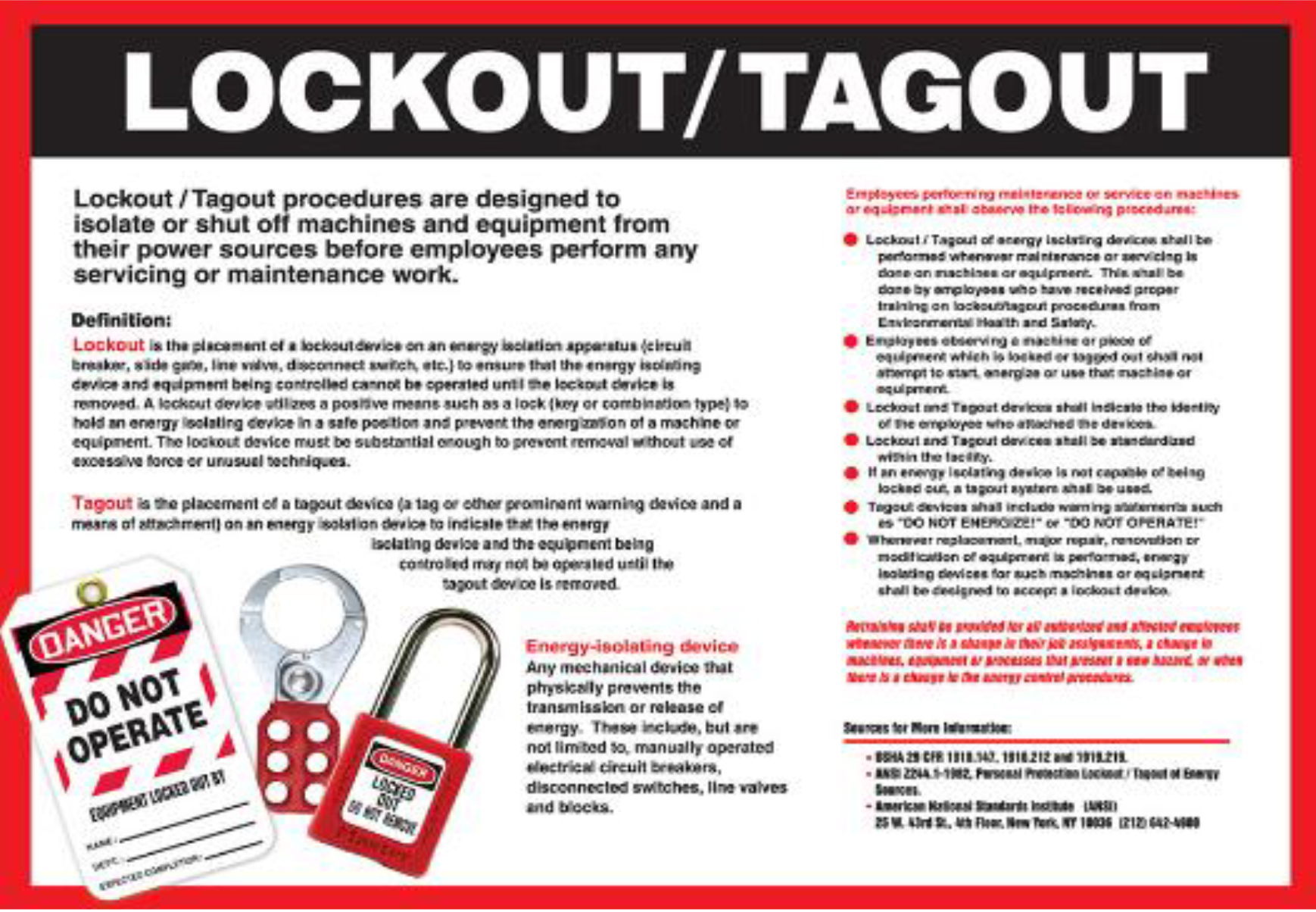
Every year, workers are injured or killed during equipment maintenance because hazardous energy wasn't properly controlled. A single missed step in a maintenance routine can turn a routine repair into a catastrophic injury. The core defense? A documented, consistently executed lockout tagout (LOTO) procedure.
This guide walks through a realistic lockout tagout procedure example, grounded in OSHA standards and real-world industrial workflows. It’s not theoretical—it’s the kind of LOTO process a maintenance team would follow on the floor of a manufacturing plant, food processing facility, or utility site.
Why a Real LOTO Procedure Example Matters
Templates and guidelines are helpful—but they don’t show the nuances of application. A true example reveals how safety procedures adapt to machinery, personnel roles, and site conditions.
For instance, a conveyor system in a packaging line presents different energy sources than a hydraulic press. Each needs a specific LOTO procedure that accounts for:
- All forms of hazardous energy (electrical, mechanical, hydraulic, pneumatic, thermal, chemical)
- The number of energy isolation points
- The roles of authorized versus affected employees
- Site-specific lockout devices and verification steps
Without a clear, written example, teams improvise. That’s where risk creeps in.
Sample Lockout Tagout Procedure: Conveyor Belt System
Below is a detailed, realistic lockout tagout procedure example for a multi-section conveyor system in a food production facility. This scenario includes electrical, mechanical, and gravity-based hazards.
Step 1: Notify Affected Personnel
Before beginning, the authorized employee (maintenance technician) informs all affected employees (machine operators) that servicing will occur. This prevents accidental restart attempts.
Real-world mistake: Skipping notification because “everyone saw the technician grab tools.” Communication must be verbal and confirmed.
Step 2: Shut Down Equipment Properly
Using the conveyor’s emergency stop button is not sufficient. The technician powers down via the main control panel, ensuring the system is in a non-operational state.
Step 3: Isolate All Energy Sources The technician locates and isolates each energy source:
- Main disconnect switch (electrical)
- Pneumatic valve (air supply)
- Gravity rollers (potential energy from elevation)
Each isolation point is physically disconnected or blocked.
Step 4: Apply Lockout and Tagout Devices At each isolation point, the technician:
- Applies a personal lock (only they hold the key)
- Attaches a standardized tag with:
- Name of the person locking out
- Date and time
- Reason for lockout
- Warning: “Do not operate—equipment under maintenance”
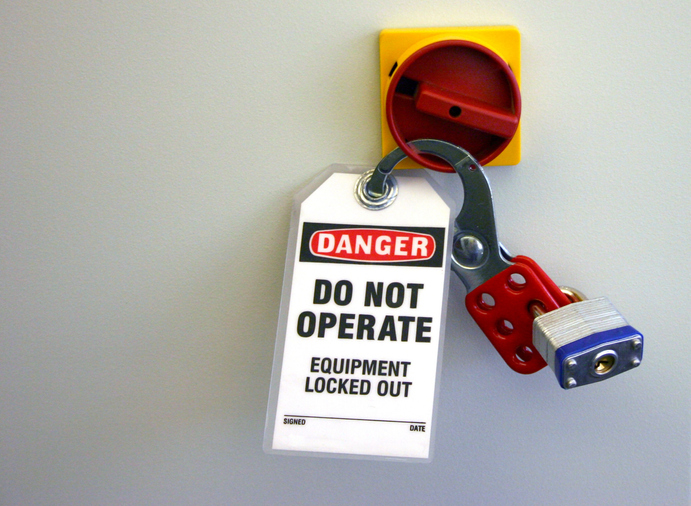
Best practice: Use a group lockout box if multiple technicians are involved. Each applies their lock to the box, which holds the master key to the main disconnect.
Step 5: Control Stored Energy Residual energy is often overlooked. The technician:
- Releases compressed air from lines
- Drains hydraulic fluid from actuators
- Manually rotates belts to confirm zero mechanical tension
- Blocks rollers to prevent movement from gravity
Step 6: Verify Zero Energy State
This is the most critical step. The technician attempts to restart the system using normal operating controls—after confirming all workers are clear.
- If the conveyor does not start: Verification successful.
- If it moves or powers: Reassess isolation points. Repeat steps.
Never assume. Always test.
Step 7: Perform Maintenance Only after verification does the technician begin repairs—replacing a worn drive belt in this case.
Step 8: Remove LOTO and Restore Service After completion:
- Tools are removed
- Guards are reinstalled
- The area is cleared
- The technician removes their lock and tag
- Affected employees are notified before restart
Each lock must be removed by the person who applied it—no exceptions.
Common Gaps in Real LOTO Procedures
Even trained teams make mistakes. These are frequent issues found during safety audits:
Incomplete Energy Source Identification
Many procedures list only electrical isolation, missing pneumatic lines or suspended loads. A full energy audit for each machine is essential.
Using Tags Without Locks Tagout-only systems are allowed under OSHA only if lockout is not feasible. Tags alone don’t physically prevent activation—and they can be ignored.
Group Lockout Mismanagement
When multiple workers are involved, a lockout box must be used. Yet some teams only lock the main disconnect, assuming one lock is enough.
Skipping Verification Assuming “it’s off” without testing leads to dangerous false confidence. Verification must be part of every procedure.
Inadequate Documentation A LOTO procedure must be written, machine-specific, and accessible. Scribbled notes on a whiteboard don’t count.
What Makes a LOTO Procedure OSHA-Compliant?
OSHA 29 CFR 1910.147 sets the standard. A compliant procedure must include:
- Specific steps for shutting down, isolating, blocking, and securing machines
- Clear instructions for placing and removing locks and tags
- A process for verifying energy isolation
- Employee training requirements
- Periodic inspections (at least annually)
But compliance isn’t just about checking boxes. It’s about designing procedures that workers can follow under real conditions—fatigue, time pressure, shift changes.
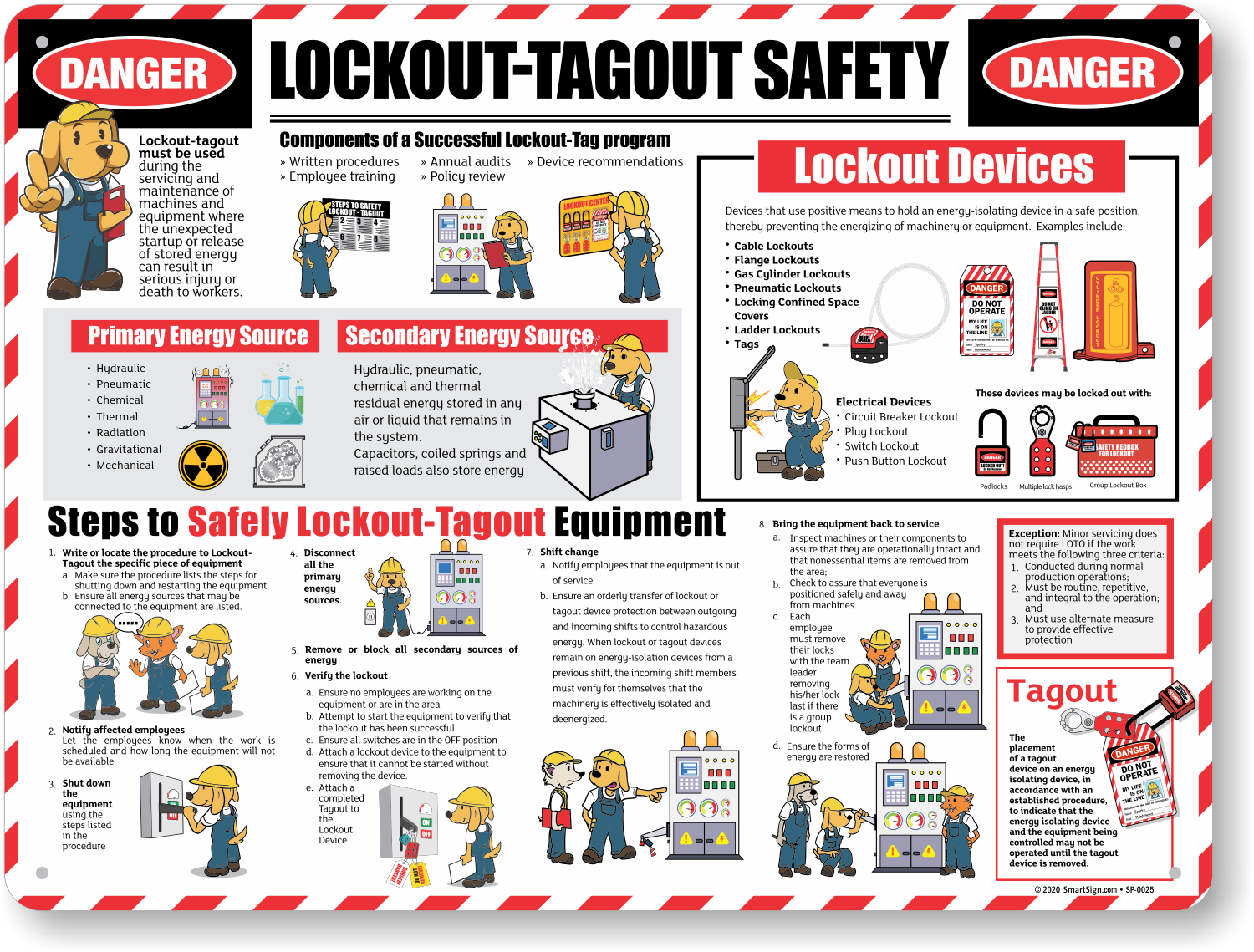
Insight: A compliant LOTO procedure is useless if it’s too complex to follow. Simplicity, clarity, and visual aids (like diagrams) improve adherence.
LOTO Procedure Checklist (Printable Format)
Use this checklist as a template for any machine-specific LOTO process:
| Step | Action | Verified? |
|---|---|---|
| 1 | Notify all affected employees | ☐ |
| 2 | Shut down using proper controls | ☐ |
| 3 | Identify all energy sources | ☐ |
| 4 | Isolate each energy source | ☐ |
| 5 | Apply personal lock and tag | ☐ |
| 6 | Release stored energy (air, pressure, springs) | ☐ |
| 7 | Block or secure moving parts | ☐ |
| 8 | Attempt to start machine (verify zero energy) | ☐ |
| 9 | Perform maintenance or servicing | ☐ |
| 10 | Remove tools, reassemble guards | ☐ |
| 11 | Notify team, remove lock and tag | ☐ |
| 12 | Restore energy and restart | ☐ |
Post this near equipment or include it in work permits.
Machine-Specific LOTO Examples
One-size-fits-all doesn’t work. Here are brief examples of how LOTO varies by equipment:
Hydraulic Press
- Isolate main electrical disconnect
- Relieve hydraulic pressure via manual bleed valve
- Install safety blocks under the ram
- Lock hydraulic valve in closed position
- Verify by attempting cycle start
Centrifuge (Lab or Industrial)
- Power off and unplug (if accessible)
- Wait for full coast-down
- Engage mechanical brake lock
- Tag emergency stop circuit
- Verify no movement on restart attempt
Boiler System
- Shut off fuel supply (gas valve)
- Isolate steam lines with locked valves
- Drain and vent pressure systems
- Lock main electrical feed
- Confirm zero pressure on gauges
Each example shows that the core LOTO framework remains, but isolation points and verification methods are tailored.
Training and Procedure Enforcement A perfect LOTO procedure fails without proper training and culture.
Authorized employees (those who perform maintenance) must be trained on:
- Energy control procedures
- Identification of energy sources
- Use of lockout devices
- Verification techniques
Affected employees (operators) must understand:
- The purpose of LOTO
- Not to restart locked equipment
- Reporting damaged tags or missing locks
Annual audits are required. During these, a supervisor watches an employee perform a full LOTO cycle and documents deviations.
Tip: Use mock drills. Simulate a breakdown and observe how the team responds. Are tags available? Are locks standardized? Do they verify?
Closing: Build, Test, Repeat
A strong lockout tagout procedure isn’t written once and forgotten. It’s living documentation—tested, updated, and reinforced through culture.
Start with a real example like the conveyor system above. Adapt it to your equipment. Involve your maintenance team in drafting and reviewing. Print checklists. Conduct unannounced audits.
Safety isn’t a policy. It’s a practice. And in energy control, practice must be flawless.
Frequently Asked Questions
What is the first step in a lockout tagout procedure? The first step is notifying all affected employees that maintenance will occur, ensuring awareness and preventing accidental restarts.
Can tagout be used without lockout? Yes, under OSHA regulations, but only if a lock cannot be applied and a tagout-only program includes additional safety measures and training.
Who is responsible for applying the lock and tag? The authorized employee performing the servicing must personally apply their lock and tag. No one else may do it.
How often should LOTO procedures be reviewed? OSHA requires periodic inspections at least annually, where a supervisor observes a full LOTO cycle and corrects any deviations.
What counts as a hazardous energy source? Electrical, mechanical, hydraulic, pneumatic, chemical, thermal, and gravitational energy—all must be controlled during servicing.
Can multiple people work on the same machine under LOTO? Yes, using a group lockout box. Each authorized employee applies their personal lock to the box, which secures the energy-isolating device.
Is LOTO required for minor maintenance? Yes, if the task involves removing or bypassing a guard, reaching into a point of operation, or exposing employees to hazardous energy.
FAQ
What should you look for in Example Lockout Tagout Procedure for Workplace Safety? Focus on relevance, practical value, and how well the solution matches real user intent.
Is Example Lockout Tagout Procedure for Workplace Safety suitable for beginners? That depends on the workflow, but a clear step-by-step approach usually makes it easier to start.
How do you compare options around Example Lockout Tagout Procedure for Workplace Safety? Compare features, trust signals, limitations, pricing, and ease of implementation.
What mistakes should you avoid? Avoid generic choices, weak validation, and decisions based only on marketing claims.
What is the next best step? Shortlist the most relevant options, validate them quickly, and refine from real-world results.

:max_bytes(150000):strip_icc():focal(728x275:730x277)/princess-catherine-prince-william-donald-trump-king-charles-iii-trump-state-visit-uk-windsor-091725-8672599a27214b6f8ffdbb07fd7596e4.jpg)